Removing Solar Panels Before Selling Your Home
Thinking about removing solar panels before selling? Learn costs, the removal process, and how it can impact your home sale and potential buyers.
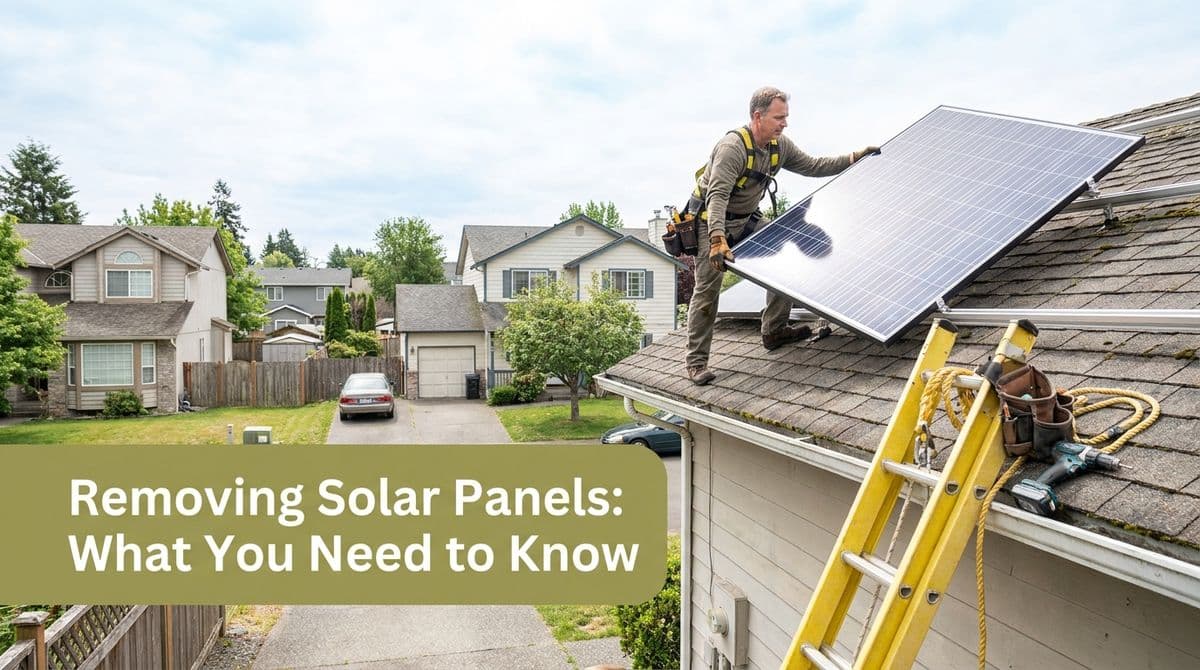
A Home Seller’s Call About Removing Solar Panels
We recently got a call from a homeowner — let’s call her Diane — who was getting her house ready to sell. The home was already listed online, and the photos clearly showed a big solar array on the roof. Her question was simple but important:
“How much does it cost to take the solar panels off, and what does that mean for selling the house?”
Diane wasn’t sure how many panels she had, just that there were “quite a few” and they were “big panels.” She wasn’t looking to move them to a new house or upgrade the system — she just wanted them removed before closing.
That call is one we’re getting more often, especially from homeowners who are putting their property on the market and aren’t sure how buyers will feel about solar. If you’re in the same boat, here’s what we walked through with Diane — and what we walk through with every homeowner thinking about removing solar panels.
First Question: Do You Really Need to Remove the Panels?
Before we even talk pricing, we always ask the same thing: Why do you want them gone?
In Diane’s case, she was worried buyers might be turned off by the panels. That can happen, but it’s not always the case. Sometimes panels help a home sell faster and for more money, especially if:
- The system is owned outright (not leased)
- The panels are in good cosmetic shape
- There’s clear documentation of electric bill savings
- Warranties and manuals are available for the buyer
On the flip side, removal may make sense if:
- The system is older and underperforming
- The roof needs replacement before or right after the sale
- The panels are damaged, mismatched, or poorly installed
- There’s a lease or loan buyers don’t want to assume
For some sellers, we actually recommend keeping the system and using it as a selling point. For others, like Diane, removal ends up being the cleaner path.
What Affects the Cost of Solar Panel Removal?
Diane’s main question was cost. On the call, she didn’t have an exact panel count, just photos online. Our first step with any homeowner is to get a rough idea of:
- Number of panels (often 20–30 on a typical home)
- Roof type (shingle, tile, metal, flat roof, etc.)
- Roof height and accessibility
- Age and condition of the system
- Whether you want full system removal (rails, wiring, inverters) or just panels
Every market is different, but in general, homeowners should budget for:
- Labor for a licensed crew to safely remove the array
- Electrical work to disconnect the system and cap wiring
- Roof repairs to seal mounting penetrations
- Disposal or storage of the panels and hardware
We strongly recommend not using a general handyman or trying to DIY removal. Panels are heavy, the racking is under tension, and there are live electrical connections to deal with. A bad removal can damage your roof, void warranties, or create safety hazards.
What the Removal Process Actually Looks Like
When we talked with Diane, we explained that complete removal is more than just “unbolting the panels.” Here’s the typical step-by-step process we follow for a home that’s about to be sold:
- Assessment and quote
We review photos, system docs (if available), and the roof type to provide a written estimate for full removal and basic roof patching. - Utility and permit checks
For most residential removals, we simply coordinate with the homeowner’s utility to ensure everything is safely shut down. Some jurisdictions require a permit; some don’t. - Safe shutdown
We turn off the system at the main service panel and at the inverter or microinverters, following manufacturer and code guidelines. - Panel and racking removal
The crew removes the modules, rails, and mounting hardware. We carefully stage panels to avoid broken glass or roof damage. - Electrical disconnect
Wiring is removed or safely capped, and any exterior conduit is taken down or made safe and neat. - Roof patching
We seal all penetrations and replace shingles or tiles where we can. If you’re planning a full re-roof, we coordinate with your roofer. - Haul-away or storage
Some homeowners keep the panels for a future off-grid or ground-mount project; others have us haul and dispose of or recycle them.
How Removing Solar Impacts Selling Your House
Diane’s home was already on Zillow, so her next concern was how removal would affect buyer interest and timing. Here are the main points we walked through with her:
1. Timing and Showing the Home
If the panels are coming off, it’s best to schedule removal before listing photos are updated or major showings begin. Otherwise, buyers may see panels online and be confused when they show up and the roof is bare.
2. Roof Condition After Removal
Buyers (and inspectors) will look closely at the roof where panels used to be. It’s smart to:
- Repair or replace any visibly damaged shingles or tiles
- Keep documentation of the removal and roof repairs
- Be ready to show receipts and contractor info during inspection
3. Disclosing the Past Solar System
Even if the panels are gone, you should disclose that there was a solar system, especially if there was any financing tied to it. Buyers and their agents may ask:
- Was it leased, financed, or owned?
- Are there any remaining liens or UCC filings?
- Were there leaks or roof issues related to the solar?
Having clear answers and paperwork makes the transaction much smoother.
Should You Remove Solar Before You Sell?
In the end, Diane decided full removal made the most sense for her situation. For you, the right answer might be different. Here’s how we suggest homeowners decide:
- Talk to your real estate agent about buyer expectations in your area
- Get a quote for removal and any roof work needed
- Compare that cost to what solar could add (or subtract) from your home’s value
- Consider whether keeping the system could be a selling feature if positioned correctly
If you’re thinking about removing solar panels before selling, we’re always happy to take a look at your system, talk through the numbers, and help you decide whether removal is the right move — or if there’s a better way to make solar work in your favor at closing.